Hearing the phrase “high-risk pregnancy” can feel like a sudden cold wave, washing over the joy and anticipation of expecting a child with fear and uncertainty. It’s a term layered with clinical weight, but often delivered without immediate context, leaving you to fill the silence with worry. It is crucial to understand that a high-risk pregnancy classification is not a prediction of a negative outcome. Rather, it is a proactive, precautionary label. It signifies that your pregnancy requires specialized monitoring and management to prevent complications and guide you and your baby to the safest, healthiest possible outcome. This comprehensive guide aims to demystify this term, explore the spectrum of conditions it encompasses, and illuminate the path of care—transforming anxiety into informed partnership with your medical team.
Demystifying the Term: What “High-Risk” Really Means
In obstetrics, “high-risk” is a tool for allocating appropriate resources. Think of it not as a diagnosis of illness, but as a personalized care plan. It indicates that due to pre-existing factors or conditions that develop during pregnancy, you and your baby have an increased statistical chance of experiencing complications compared to the general pregnant population. The goal of labeling a pregnancy as high-risk is to implement vigilant surveillance and intervention strategies to mitigate those risks.
This classification triggers a shift in your care, typically involving:
- More frequent prenatal visits.
- Consultation with a Maternal-Fetal Medicine (MFM) specialist (a doctor with advanced training in high-risk pregnancies).
- Additional testing and ultrasounds.
- Care coordination with other specialists (e.g., endocrinologists, cardiologists).
Causes and Categories: The Spectrum of High-Risk Factors
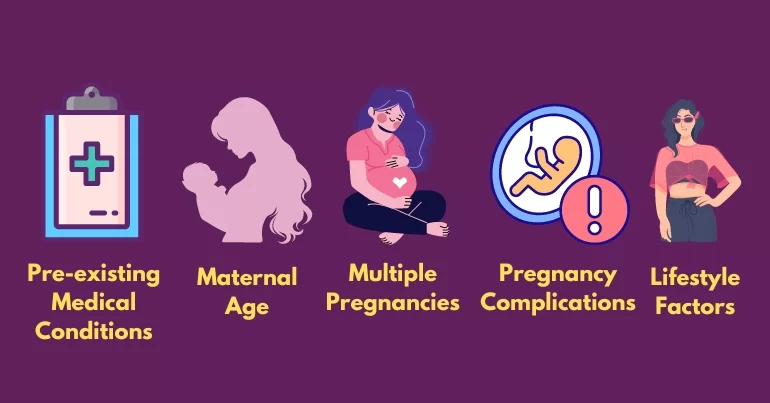
High-risk factors generally fall into two categories: those that exist before pregnancy (pre-existing or maternal factors) and those that arise during pregnancy (gestational or fetal factors).
Category 1: Pre-existing Maternal Health Conditions
These are chronic conditions you manage before becoming pregnant. With careful planning and management, most lead to healthy pregnancies.
- Autoimmune Diseases: Conditions like Lupus (SLE) and Rheumatoid Arthritis can increase the risk of preeclampsia, preterm birth, and fetal heart block. Management involves a rheumatologist and careful medication review.
- Chronic Hypertension: High blood pressure before pregnancy requires tight control, often with pregnancy-safe medications, to prevent superimposed preeclampsia and fetal growth restriction.
- Diabetes (Type 1 or Type 2): Uncontrolled blood sugar significantly increases the risk of birth defects, miscarriage, large birth weight (macrosomia), and newborn complications. Achieving optimal glucose control before conception and throughout pregnancy is paramount.
- Thyroid Disorders: Both hypothyroidism (underactive) and hyperthyroidism (overactive) must be well-managed to support fetal brain development and prevent pregnancy loss or preterm birth.
- Heart Disease: Congenital or acquired heart conditions require a cardiologist’s oversight to manage the increased cardiovascular demands of pregnancy.
- Chronic Kidney Disease: Impacts blood pressure and fluid balance, requiring nephrology consultation.
- Obesity (High BMI): Increases the risk of gestational diabetes, preeclampsia, cesarean delivery, and fetal anomalies. Focus is on healthy weight gain and screening for related conditions.
Category 2: Conditions Arising from the Pregnancy Itself
These develop after conception and turn a previously low-risk pregnancy into a high-risk one.
- Gestational Diabetes (GDM): Insulin resistance that develops in pregnancy. Managed with diet, exercise, and sometimes medication to prevent macrosomia and birth complications.
- Preeclampsia/Eclampsia: A serious disorder marked by high blood pressure and protein in the urine after 20 weeks, potentially affecting the liver, kidneys, and brain. Delivery is the only cure, so management focuses on controlling blood pressure and monitoring until the baby can be safely born.
- Placental Disorders:
- Placenta Previa: The placenta covers the cervix, often necessitating a c-section and carrying a risk of bleeding.
- Placental Abruption: The placenta separates from the uterine wall prematurely, a dangerous emergency for both mother and baby.
- Preterm Labor & Cervical Insufficiency: Labor beginning before 37 weeks. Cervical insufficiency (an incompetent cervix) is a painless, premature opening of the cervix that can lead to second-trimester loss.
- Fetal Growth Restriction (FGR/IUGR): The baby is not growing at the expected rate, often due to placental issues.
- Multiple Pregnancy (Twins/Triplets+): Carrying more than one baby automatically classifies a pregnancy as high-risk due to increased chances of preterm birth, preeclampsia, and growth discordance.
Category 3: Age, History, and Lifestyle Factors
- Advanced Maternal Age (35+): While most people over 35 have healthy pregnancies, the statistical risk for chromosomal conditions, miscarriage, and pregnancy-related hypertension increases.
- Advanced Paternal Age (45+): Emerging research links it to a slight increase in some genetic conditions and pregnancy complications.
- History of Pregnancy Loss or Preterm Birth: A prior history elevates the risk of recurrence.
- Substance Use: Smoking, alcohol, and illicit drug use significantly increase risks.
The Management Framework: The Pillars of High-Risk Prenatal Care
If your pregnancy is classified as high-risk, your care will be structured, proactive, and multidisciplinary.
1. Specialized Provider Team:
Your team may include your OB-GYN, a Maternal-Fetal Medicine (MFM) specialist, and other relevant specialists. The MFM is not your replacement OB, but a consultant who provides expertise on the high-risk aspect of your care.
2. Increased Surveillance & Testing:
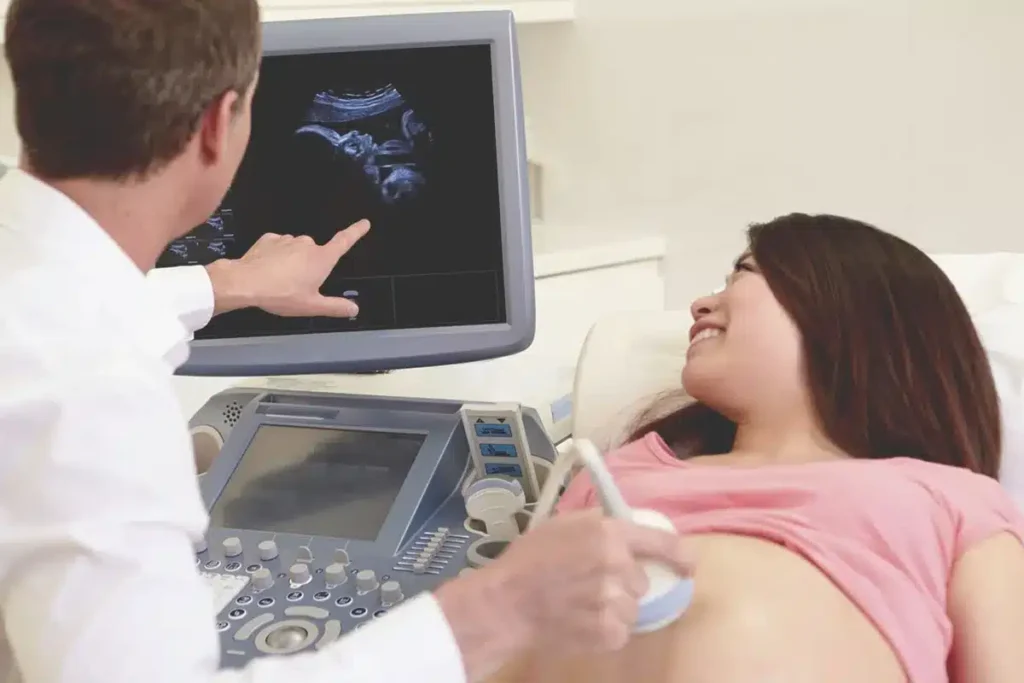
- Frequent Ultrasounds: Growth scans, biophysical profiles (BPP), and Doppler flow studies to assess fetal well-being and placental function.
- Non-Stress Tests (NST): Monitoring the baby’s heart rate in response to movement, often done weekly in the third trimester.
- Lab Work: More frequent blood draws to monitor conditions like diabetes, preeclampsia labs, or medication levels.
- Cervical Length Screening: For those with a history of preterm birth or concerning symptoms, to assess risk of preterm labor.
3. Medication & Intervention Management:
- Medication Adjustments: Ensuring all medications are safe and at optimal doses for pregnancy.
- Prophylactic Treatments: Such as low-dose aspirin for those at high risk of preeclampsia.
- Procedures: Cerclage (stitch in the cervix) for cervical insufficiency, amnioreduction for TTTS, or early delivery when the risks of continuing pregnancy outweigh the benefits.
4. The Birth Plan & Timing of Delivery:
A high-risk pregnancy often involves a detailed, flexible birth plan. The timing of delivery may be scheduled (induction or c-section) to mitigate risks before they become emergencies. Delivering at a hospital with a Level III or IV Neonatal Intensive Care Unit (NICU) is often recommended.
The Emotional Journey: Coping with the Stress of a High-Risk Pregnancy
The psychological toll is real and valid. You may feel grief for the “normal” pregnancy you envisioned, anxiety about every test result, and isolation.
- Acknowledge Your Feelings: Allow yourself to feel fear, anger, or sadness without judgment.
- Become an Informed Partner: Ask questions. Understand the “why” behind each test and recommendation. Knowledge reduces helplessness.
- Seek Support: Connect with a therapist specializing in perinatal mental health. Join support groups (in-person or online) for people with your specific condition. You are not alone.
- Communicate with Your Partner: Share your fears and needs. They may also be struggling and feeling powerless.
- Practice Self-Compassion: Let go of guilt. Your condition is not your fault. Celebrate small victories—each good scan, each week you stay pregnant.
Redefining “Success”: Setting Realistic and Positive Goals
The goal of a high-risk pregnancy is not necessarily a perfect, full-term delivery without intervention. Success is:
- A healthy parent.
- A healthy baby.
- A care team that detected and managed issues proactively.
- You feeling heard, supported, and actively involved in your care.
Sometimes success is getting to 28 weeks, then 32, then 34. Sometimes it’s a well-managed c-section at 37 weeks. Redefine success on terms that honor your unique journey.
FAQ: Your High-Risk Pregnancy Questions, Addressed
Q: Does a high-risk pregnancy always mean I’ll have a premature baby or a c-section?
A: No. Many high-risk pregnancies, with proper management, result in full-term or near-full-term deliveries. Vaginal birth is also possible for many conditions. The classification means these outcomes are monitored for more closely.
Q: Will I always see an MFM specialist instead of my regular OB?
A: Typically, it’s a shared-care model. You see your OB for routine care and the MFM for specialized consultations and ultrasounds. They collaborate on your overall plan.
Q: Can a high-risk pregnancy become low-risk later on?
A: In some cases, yes. For example, if a case of mild gestational diabetes is perfectly managed with diet and shows no complications, the risk profile improves. However, the label often stays for caution and consistent monitoring.
Q: How can I prepare for a high-risk pregnancy before conceiving?
A: Preconception counseling is invaluable. Meet with your doctor and relevant specialists. Optimize management of chronic conditions, review medications, start prenatal vitamins with folic acid, and achieve a healthy weight. This is the single best thing you can do.
Q: Is bed rest commonly prescribed?
A: True, strict bed rest is now rarely recommended for most conditions due to risks of blood clots and muscle atrophy. “Activity restriction” or “taking it easy” may be advised, but always get specific instructions from your provider.
Q: How do I deal with well-meaning but fear-inducing stories from others?
A: Have a prepared response: “I appreciate your concern, but my medical team has a specific plan for my situation, and I’m focusing on the positive information they provide.”

A high-risk pregnancy is a journey that demands more—more appointments, more information, more emotional fortitude. But it also offers more: more support from a specialized team, more detailed insights into your baby’s well-being, and an opportunity to become a powerful advocate for your health. By understanding the causes, embracing the structured management, and tending to your emotional needs, you reclaim agency. This path may have more signposts and checkpoints, but it leads to the same destination: meeting your baby, supported by the knowledge that you navigated a complex journey with courage and care. You are not just a patient; you are the central, resilient figure in your own remarkable story.