You’re getting out of bed, rolling gently to your side as you’ve learned. As you push yourself up—zing!—a sudden, electric twinge shoots from your lower abdomen down into your groin. It’s sharp enough to make you gasp, freeze in place, and your hand flies to your bump. A wave of worry follows: Is this the baby? Is something wrong?
If this scenario feels familiar, take a deep breath. You are likely experiencing one of pregnancy’s most common, yet startling, musculoskeletal complaints: round ligament pain. While it can be intense and unnerving, it is almost always a normal sign of your amazing body adapting to your growing baby. This guide is your comprehensive resource for demystifying that “zing,” transforming fear into understanding, and giving you a practical toolkit for relief and empowerment.
Meet Your Round Ligaments: The Anatomy of the Pain
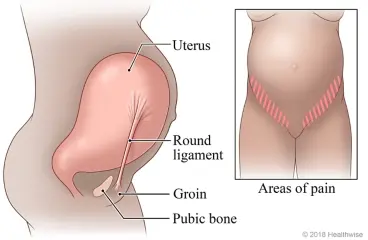
To understand the pain, let’s meet the structures involved. Think of your uterus as a beautiful, upside-down pear. Anchoring it at the front are two cord-like bands of tissue called the round ligaments. One runs from each side of the upper uterus, down through the inguinal canal (in the groin), and attaches to the labia majora.
Their job is simple but crucial: to provide support and stability to your uterus, holding it in place within your pelvis. Before pregnancy, these ligaments are thick, taut, and about the size of a pencil.
Now, imagine your uterus beginning its incredible expansion. As your baby grows, your uterus stretches from a pelvic organ to one that fills your abdominal cavity. Those once-short, sturdy ligaments must now stretch, thin out, and lengthen dramatically—like thick rubber bands being gently but firmly tugged over months. This necessary stretching, along with the effects of the hormone relaxin (which loosens joints and ligaments to prepare for birth), is the primary source of your discomfort.
The “Zing” Factor: Why It Hurts and Common Triggers
Round ligament pain isn’t typically a constant, dull ache. Its signature is its suddenness. The pain occurs when these already-stretched ligaments are suddenly strained or go into a brief spasm. This is often triggered by movements that quickly change their tension.
Classic Triggers Include:
- Sudden Movements: Rolling over in bed, getting up too quickly from a chair or the bath, or standing up after bending over.
- Jarring Motions: Sneezing, coughing, laughing hard, or even a brisk walk that turns into a slight stumble.
- Physical Activity: Specific movements like standing up from a deep squat or certain exercises that engage the core abruptly.
- Prolonged Activity: Walking or standing for long periods can lead to fatigue in the supporting muscles, placing more direct strain on the ligaments.
The sensation is often described as a sharp, stabbing, or pulling feeling that comes on quickly and subsides within a few seconds to a few minutes. You might feel a lingering ache afterward.
Is This Round Ligament Pain? Your Symptom Checker
How can you be reasonably sure it’s round ligament pain and not something more concerning? Here’s the classic presentation:
- Location: Lower abdomen, often on one side (right side is more common), radiating into the groin or inner thigh. It is a deep tissue pain.
- Quality: Sharp, stabbing, or sometimes a dull ache after the initial “zing.”
- Duration: Short-lived! It lasts from a few seconds to a few minutes, then resolves completely.
- Timing: Most frequently reported during the second trimester, as the uterus makes its most rapid growth spurt out of the pelvis, but it can occur anytime.
Round Ligament Pain vs. Other Pains: A Crucial Comparison
This is the most important knowledge for your peace of mind and safety. Use this chart to differentiate.
| Symptom | Round Ligament Pain | Braxton Hicks Contractions | Preterm Labor | UTI or Kidney Infection |
|---|---|---|---|---|
| Sensation | Sharp, stabbing, pulling. | Tightening, squeezing, hardening of the entire uterus. | Menstrual-like cramps, constant lower backache, pelvic pressure. | Burning with urination, constant ache, possible flank pain (kidney). |
| Location | One side, lower abdomen/groin. | Whole uterus, front-focused. | Whole lower abdomen, back, pelvis. | Suprapubic (above pubic bone) or flank. |
| Duration | Seconds to minutes. | 30 seconds to 2 minutes, comes and goes irregularly. | Regular, persistent (e.g., every 10 minutes). | Constant discomfort. |
| Triggers | Sudden movement, coughing. | Often after activity, dehydration, baby movement. | May start without clear trigger. | N/A |
| Other Signs | None. Resolves with rest. | Cervix doesn’t change. | Possible change in vaginal discharge, fluid leak. | Fever, chills, urgency, cloudy urine. |
RED FLAGS – CALL YOUR PROVIDER IMMEDIATELY IF YOU EXPERIENCE:
- Pain that is severe, constant, or rhythmic/cramping.
- Bleeding or spotting.
- Fever, chills, or dizziness.
- Painful urination.
- A noticeable decrease in fetal movement.
- Any feeling of pressure in your pelvis or vagina (like the baby is pushing down).
Your Relief Toolkit: From Immediate Soothing to Prevention
Empowerment comes from action. Here is your multi-tiered strategy for managing round ligament pain.
First Aid for the “Zing”: What to Do When Pain Strikes
When that sharp pain hits, don’t panic. Try these steps:
- Stop and Rest: Immediately cease the activity that triggered it.
- Bend Toward the Pain: Gently flex your hips, bending slightly toward the side that hurts. This can help release tension on the ligament.
- Apply Gentle Heat: Place a warm (not hot) compress or heating pad on the painful area for 15-20 minutes. A warm bath can also work wonders.
- Practice Deep Breathing: Slow, diaphragmatic breaths can help relax your core muscles and ease the spasm.
- Gentle Massage: Use light, circular pressure around (not directly on) the painful spot.
Preventive Stretches & Strength
Building supportive strength and flexibility is key to reducing frequency and severity.
Gentle Stretches:
- Cat-Cow Pose: On hands and knees, alternate between arching your back (cat) and dipping it gently (cow). This mobilizes the spine and pelvis.
- Prenatal Pelvic Tilts: On your back with knees bent (only if comfortable) or standing against a wall, gently rock your pelvis forward and back, flattening your lower back.
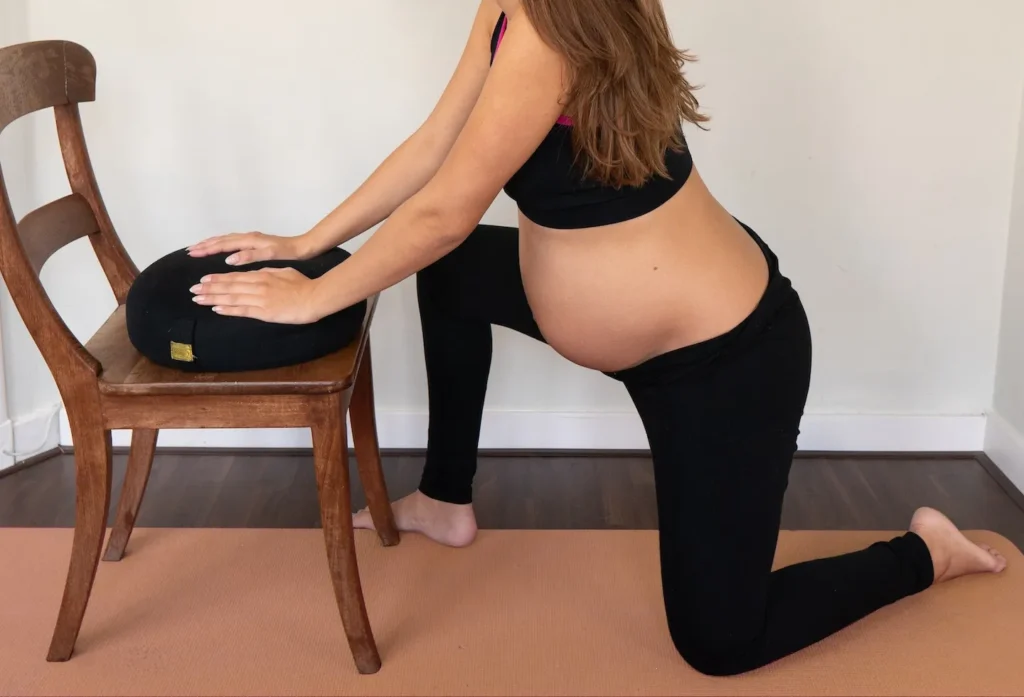
- Supported Squat: Holding onto a sturdy chair or counter, lower into a gentle squat to stretch the groin and pelvic floor.
Supportive Strength:
- Glute Bridges: Lie on your back with knees bent, feet flat. Lift your hips toward the ceiling, squeezing your glutes. This strengthens the posterior chain to better support your pelvis.
- Modified Side-Lying Leg Lifts: Lie on your side. Keeping your leg straight, slowly lift it a few inches. This strengthens the hip abductors.
Smart Daily Habits for Long-Term Relief
Lifestyle tweaks can make a profound difference.
- Change Position Slowly: Move with intention. Roll onto your side and use your arms to push up when getting out of bed or off the couch.
- Support Your Belly: Before you sneeze, cough, or laugh, gently support your lower abdomen with your hands.
- Invest in a Pregnancy Support Belt: A well-fitted pregnancy support belt for round ligament pain can provide significant uplift and stability, especially during walks or long periods of standing.
- Pillow for Sleep: Place a pillow between your knees and another under your bump when side-sleeping to keep your spine and pelvis aligned.
- Footwear: Wear supportive, low-heeled shoes.
- Listen to Your Body: If an activity consistently causes pain, modify or pause it. Hydrate well, as dehydration can increase muscle cramps.
FAQ: Your Round Ligament Pain Concerns, Addressed
Q: Can round ligament pain happen on only one side?
A: Absolutely. It’s very often one-sided, and the right side is more commonly reported, though it can occur on either side or both.
Q: Is it normal for the pain to take my breath away?
A: Yes. Due to its sudden, sharp nature, it can be intense enough to cause a momentary gasp or make you freeze. This is a common description.
Q: Could this pain hurt the baby?
A: No. The round ligament pain is happening in the supportive structures around your uterus. Your baby is well-cushioned and protected inside the amniotic sac. The discomfort is entirely yours, not the baby’s.
Q: When does round ligament pain usually start and end?
A: It most commonly begins in the second trimester (weeks 14-28) during the period of most rapid uterine growth. It may come and go throughout pregnancy, often easing in the late third trimester as the baby settles into the pelvis and uterine growth slows. For some, it recurs briefly during the pushing stage of labor.
Q: Should I stop exercising if I have round ligament pain?
A: Not necessarily. You may need to modify your routine. Avoid jerking motions, high-impact activities, and sudden direction changes. Focus on controlled, gentle exercises like walking, swimming, prenatal yoga, and strength training. Always warm up properly and listen to your body—if a specific movement hurts, don’t do it.
That sudden sharp pain in your lower abdomen when pregnant is more than just a nuisance; it’s tangible evidence of the profound adaptation your body is mastering. While round ligament pain can be startling, you now hold the map to navigate it: understanding its source, confidently differentiating it from warning signs, and applying a range of strategies from immediate relief to preventive stretches and lifestyle habits.
Reframe that “zing” not as a signal of alarm, but as a reminder of the incredible work of supporting new life. You are not just enduring this change; you are actively partnering with your body through informed, gentle care. Trust your instincts, use this knowledge, and never hesitate to reach out to your healthcare provider with any concerns. You’ve got this.