The Crucial Connection: Why Your Sleep Matters More Than Ever
You’ve heard it a million times: “Sleep while you can!” While well-intentioned, this advice can feel laughable when you’re navigating the nightly gauntlet of pregnancy insomnia, relentless hip pain, and the struggle to find a comfortable position with a growing belly. But the truth behind the cliché is profound. Quality sleep during pregnancy isn’t a luxury; it’s a critical component of prenatal health for you and your developing baby.

Research links poor sleep in pregnancy to higher risks of gestational diabetes, preeclampsia, longer labors, and even postpartum depression. For your baby, your restorative sleep supports healthy growth and neurological development. The challenge is that the very physical changes that nurture your baby—the expanding uterus, shifting center of gravity, loosening ligaments, and increased blood volume—are the same ones that wage war on your sleep.
This guide is your ally. We’ll move beyond generic tips and dive into the best sleeping position during pregnancy second trimester, explore actionable solutions for hip pain at night, and provide detailed, honest reviews of specific pregnancy pillows designed to meet your unique needs. Our goal is to equip you with the knowledge to transform your nights from a battle into a sanctuary of rest, because when you sleep well, you’re building a healthier foundation for both of you.
The Golden Rule: Mastering Safe Sleep Positions Trimester by Trimester
Your sleep position is the cornerstone of prenatal rest. As your body changes, so do the rules of the game. The key is to prioritize blood flow to the placenta and avoid putting pressure on major blood vessels and organs.
First Trimester: The Window of Flexibility
In these early weeks, you can likely still sleep comfortably on your back or stomach. However, this is an ideal time to gently begin training yourself to sleep on your left side. Starting the habit early makes the transition in later trimesters much smoother. If you’re a dedicated stomach sleeper, enjoy it while you can, but consider placing a small, flat pillow under one hip to start a slight tilt.
Second Trimester: The Time to Transition
By weeks 16-20, most obstetricians recommend abandoning back and stomach sleeping. This is when the best sleeping position during pregnancy second trimester becomes clearly defined: Side sleeping, ideally the left side. Why the left?
- Optimal Circulation: It prevents your heavy uterus from compressing the inferior vena cava (the major vein that returns blood to your heart), ensuring maximum blood flow to your kidneys, uterus, and, most importantly, your baby.
- Organ Relief: It improves kidney function, leading to more efficient waste removal and reduced swelling in your hands, ankles, and feet.
What if I wake up on my back? Don’t panic. Your body will likely wake you with discomfort or shortness of breath if circulation is compromised. Simply roll back onto your side. Using supportive pillows (which we’ll cover next) makes it physically harder to roll onto your back.
Third Trimester: Side Sleeping as a Non-Negotiable
Left-side sleeping is now paramount. To make this position sustainable and pain-free, strategic support is not a suggestion—it’s a necessity. This is where the right pregnancy pillow for back and hip pain becomes a game-changer.
The Pillow Arsenal: In-Depth Reviews of Specific Pregnancy Pillow Types
The market is flooded with options, and choosing can be overwhelming. Let’s break down the most popular types with specific brand examples and their pros and cons.
1. The Full-Length Body Pillow (The Classic C-Shape)
- Example Brands: PharMeDoc (Standard C-Shape), Queen Rose.
- How It Works: This long, continuous pillow is shaped like a “C.” You lie in the curve, with your head on one end, the pillow between your knees/under your bump, and your back supported by the other end.
- Ideal For: The all-in-one solution seeker. It’s excellent for preventing you from rolling onto your back and provides comprehensive support.
- Pros: Full-body support, great for side sleepers, can be used post-pregnancy.
- Cons: Can be bulky and hot; switching sides requires moving the entire pillow; some find the head pillow section too flat.
- Best for: Those who want maximum containment and support and have a larger bed.
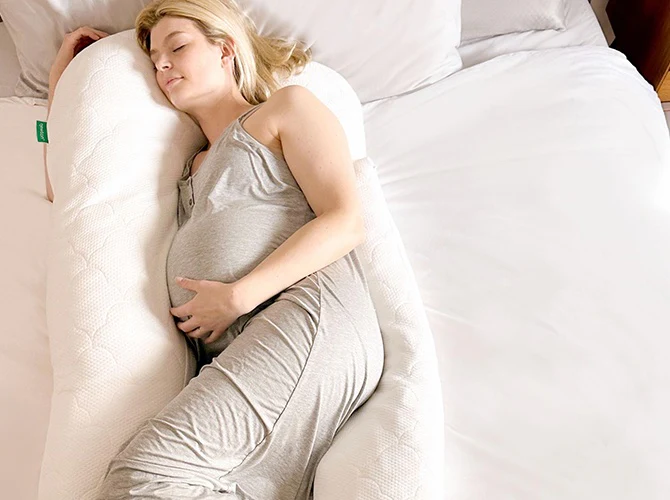
2. The U-Shaped Pillow (The Ultimate Fortress)
- Example Brands: PharMeDoc (U-Shape), Babymoov.
- How It Works: This is essentially two C-pillows attached at the ends, forming a “U.” It surrounds you completely.
- Ideal For: Those with extreme restlessness or significant hip and back pain during pregnancy. It supports both sides simultaneously, making flipping over effortless.
- Pros: Unbeatable support on both sides, eliminates the need for any other pillow.
- Cons: Extremely bulky; takes over the entire bed; can be very warm; often the most expensive option.
- Best for: People with chronic pain who have a king-size bed or don’t share it with a partner.
3. The Wedge Pillow (The Strategic Spot-Saver)
- Example Brands: Boppy Pregnancy Wedge.
- How It Works: A small, triangular foam wedge.
- Ideal For: Targeted support. Tuck it under your belly when on your side to relieve ligament strain, or place it behind your lower back when propped up to prevent rolling back.
- Pros: Inexpensive, versatile, not bulky, perfect for travel or napping on the couch.
- Cons: Does not provide full-body support; is only one part of a sleep solution.
- Best for: Belly support for stomach sleepers in early pregnancy, supplemental support for back-sleepers-in-training, or travel.
4. The J-Shape / Contoured Pillow (The Hybrid Innovator)
- Example Brands: Bobby Sleep Prenatal Pillow.
- How It Works: It has a unique contoured shape—long on one side for knee/spine alignment and shorter on the other for versatile tucking under head, belly, or back.
- Ideal For: The combination sleeper who wants flexibility. It’s less bulky than a U-shape but offers more defined support than a simple body pillow.
- Pros: Versatile positioning, less space-consuming, often designed with cooling materials.
- Cons: May not provide enough “barrier” to prevent back-rolling for some.
- Best for: Those with limited bed space who still want dedicated, contoured support.
What about a pregnancy pillow for hip pain? For isolated, severe hip pain (often Symphysis Pubis Dysfunction or SPD), a firm, dedicated knee pillow is crucial. Look for a contoured memory foam pillow that straps to your thigh, ensuring your knees stay parallel and your pelvis aligned all night. The BabyBub Maternity Pillow is a popular example of this targeted design.
Beyond the Pillow: Holistic Solutions for Hip Pain and Restlessness
Pillows provide structure, but conquering pain requires a multi-pronged approach. Here are proven solutions for hip pain at night:
- Pre-Sleep Stretching: Gentle, prenatal yoga stretches for the hips and glutes can work wonders. Try the pigeon pose (modified on your back if needed) or a simple figure-four stretch before bed.
- Strategic Support During the Day: Avoid standing on one leg, and sit down to put on pants/shoes. This reduces strain on the symphysis pubis joint.
- The Magic of a Warm Bath or Heat Pack: Applying a warm (not hot) heating pad to your lower back or hips for 15-20 minutes before bed can relax muscles and ease ligament pain.
- Chiropractic Care & Prenatal Massage: A chiropractor trained in the Webster Technique or a licensed prenatal massage therapist can provide significant, lasting relief by addressing alignment and muscle tension.
- Mindful Movement: A short, slow walk in the afternoon can improve circulation and reduce stiffness, paradoxically leading to better sleep.
Creating Your Perfect Sleep Sanctuary: Environment & Routine
Your bed setup and habits are just as important as your position and pillow.
- Mattress Matters: If your mattress is too soft, it will sag and misalign your spine. Consider a firm mattress topper for added support.
- The Bedtime “Power-Down”: Create a consistent, screen-free routine 60 minutes before bed. Read a physical book, listen to a calming pregnancy meditation, or practice gentle breathing exercises.
- Manage Nighttime Heartburn & RLS: For heartburn, eat your last meal 2-3 hours before bed and sleep propped up. For Restless Leg Syndrome (RLS), check your iron levels with your provider, as low ferritin is a common cause.
- Hydrate Smartly: Drink most of your water earlier in the day to minimize nighttime bathroom trips, but don’t go to bed dehydrated.
Frequently Asked Questions (FAQ)
Q: I’m only 14 weeks. Is it too early for a pregnancy pillow?
A: Not at all! Starting early helps you establish good side-sleeping habits and can prevent pain before it starts. A wedge or a smaller body pillow is a great introduction.
Q: Can I use a regular body pillow instead?
A: You can, but it may not be enough. Regular body pillows lack the specific contours and firmness designed to support a pregnant belly and align the pelvis. They often flatten out, failing to provide the crucial lift needed for relieving hip pain in third trimester.
Q: What’s the best side sleeping position for pregnancy if my left side is painful?
A: The left side is ideal, but the right side is a perfectly acceptable alternative. The goal is to be on *a* side, not specifically the left all night. Listen to your body and switch sides as needed.
Q: How do I wash a large pregnancy pillow?
A: Most come with a removable, machine-washable cover. The inner core is typically spot-clean only. Always check the specific care label before purchasing.
Q: Will these pillows help after pregnancy?
A: Absolutely. They are fantastic for breastfeeding support, propping during recovery, and even as a cozy nest for your baby during supervised tummy time.
Conclusion: Rest is Part of the Journey
Investing in your sleep is one of the most concrete acts of self-care you can perform during pregnancy. It’s not about achieving perfection—you will still have challenging nights—but about giving yourself the tools and knowledge to reclaim as much rest as possible.
Remember, the discomfort is temporary, but the benefits of prioritizing rest are lasting. By finding the best pregnancy pillow for your sleeping style, implementing solutions for hip pain, and crafting a calming routine, you’re doing more than just seeking comfort. You’re actively nurturing your well-being and creating a peaceful, healthy environment for your baby to grow. Tonight, give yourself permission to experiment, to build your pillow fortress, and to sink into the rest you truly deserve.