You are doing something remarkable. Every time you nurse, your body crafts “liquid gold,” a perfectly customized form of nutrition that evolves as your little one grows. The part that often gets left out is that this milk does not appear from thin air; it comes directly from your own physical resources, which is exactly why good nutrition for breastfeeding moms matters as much for you as it does for your baby.
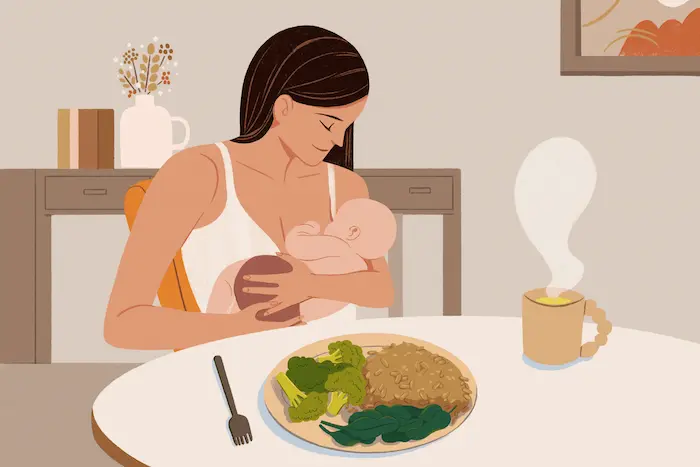
We have all heard “eating for two” during pregnancy, but breastfeeding actually demands more from your body than pregnancy did. Your baby still relies on you entirely for nutrients, and your body works around the clock to provide them. So what should you eat? This is not the restrictive diet-culture version of healthy eating, full of rules and guilt. It is about real, satisfying food that sustains your energy, supports your supply, and helps you feel like yourself again during an intense, often exhausting season. This guide pairs well with our broader postnatal diet plan for overall recovery.
How Breastfeeding Changes Your Nutritional Needs
Breastfeeding is metabolically expensive. Producing milk takes real energy, and your body is remarkably efficient at prioritizing your baby’s needs, sometimes at your own expense. Mothers who breastfeed exclusively burn roughly 450 to 500 extra calories a day, a figure the CDC confirms, though the exact amount depends on how often you nurse and your baby’s age. Most experts suggest aiming for those 450 to 500 extra calories above your pre-pregnancy baseline, but you do not need to count every one; your body signals what it needs through hunger, so the goal is to listen and choose nourishing foods when you can.
There is also a concept called nutrient partitioning: your body is programmed to send nutrients to your milk even if that depletes your own stores. It is a beautiful bit of biology, but it also means that if your diet is lacking, you feel it first, not your baby. The WHO points out that maternal depletion affects your mood, energy, and long-term health, so eating well is about keeping you strong too.
The Building Blocks of Breast Milk
Protein provides the amino acids for your baby’s rapid growth and brain development while repairing your own tissues after birth. ACOG suggests breastfeeding moms aim for at least 65 grams a day, from sources like eggs, lean meats and poultry, low-mercury fish, beans, lentils and chickpeas, Greek yogurt, and tofu or tempeh.
Healthy fats matter because breast milk is naturally high in fat, supplying about half your baby’s calories, and the type you eat counts. DHA, an omega-3, is critical for brain and eye development, and the AAP notes that DHA levels in milk directly reflect what the mother eats; if you fall short, your body pulls from its own reserves. Get it from fatty fish like salmon, sardines, and trout (low-mercury choices), algae oil supplements, omega-3 enriched eggs, and flax and chia seeds (which convert less efficiently). Complex carbohydrates then give you steady energy to fight the afternoon crash, so lean on oatmeal (a longtime supply favorite), whole grain breads and pastas, quinoa and brown rice, sweet potatoes, and legumes.
A few micronutrients deserve special attention. Calcium protects your bones, since your body will pull calcium from them to enrich your milk if your intake is low; the Mayo Clinic recommends about 1,000 mg a day from dairy, fortified plant milks, canned salmon with soft bones, dark leafy greens, and tahini. Vitamin D helps you absorb that calcium (aim for 600 IU daily, and note the AAP recommends a vitamin D supplement for all breastfed infants). Iron guards against postpartum fatigue, from lean red meat, poultry, fortified cereals, spinach, and beans, and pairing plant iron with vitamin C boosts absorption. And choline, often overlooked, is vital for your baby’s brain and memory, with egg yolks among the best sources, along with salmon, chicken, broccoli, and soy. A prenatal or postnatal vitamin helps fill any gaps, as our postpartum vitamins guide explains.

Foods That Support Milk Supply
Many moms search for the best foods to boost supply, and the truth is nuanced. Real medical low supply is rare, and issues usually come down to how efficiently the baby nurses and how often you feed rather than what you ate, which our guide to increasing milk supply naturally covers. Still, a few foods have supported lactation for generations. Oats are the gold standard, rich in iron and a fiber called beta-glucan that may nudge up prolactin (the milk-making hormone), so choose steel-cut or old-fashioned. Fenugreek is a popular herbal support, though evidence is mixed, and the AAP advises checking with your doctor or a lactation consultant before using it. Dark leafy greens like spinach, kale, and Swiss chard add calcium, iron, and folate; salmon and other cold-water fish bring DHA, B12, and protein; nuts and seeds offer minerals and one-handed convenience; and legumes like chickpeas and lentils are easy, protein-rich staples. Our roundup of superfoods to boost milk supply goes deeper.
Hydration: How Much You Actually Need
Breast milk is roughly 87% water, and while your body will still make milk if you are under-hydrated, you will feel it, since dehydration is a leading cause of postpartum fatigue, headaches, and dizziness. There is no magic number, but around 13 cups (3.1 liters) of total fluids a day, including water, tea, and fluids from food, is a good guideline. Rather than counting ounces, drink a glass of water every time you nurse and keep a large bottle at your nursing station. The Mayo Clinic offers a simple check: pale yellow urine usually means you are well hydrated, while dark yellow means it is time to drink up.
Smart Snacking for Busy Moms
On four hours of sleep, gourmet cooking is off the table, so strategic snacking becomes your best friend. Keep easy, grab-and-go options nearby: trail mix with nuts, seeds, and a little dark chocolate; Greek yogurt topped with berries; hard-boiled eggs prepped at the start of the week; oatmeal energy bites made with oats, peanut butter, and honey; cheese sticks with whole grain crackers; apple slices with almond butter; roasted chickpeas; hummus and baby carrots; and avocado on rice cakes. Blended options work well too, and our smoothies for new moms pack spinach, fruit, and protein into something you can drink one-handed. The goal is not fancy; it is getting nutrient-dense food into your system with as little effort as possible.
Foods to Approach With Caution
Most foods are fine while breastfeeding, but a few call for awareness. The AAP considers moderate caffeine (about 200 to 300 mg, or two to three cups of coffee) safe, though some babies are more sensitive and may get fussy. The CDC advises avoiding alcohol but notes an occasional planned drink is generally okay if you wait about two hours per drink before nursing. Skip high-mercury fish like shark, swordfish, and king mackerel in favor of shrimp, salmon, and canned light tuna. Highly processed foods are fine in a pinch, just balance them with whole foods when you can. And on the common worry about a gassy baby, true food sensitivities in breastfed infants are actually rare (cow’s milk protein is the usual culprit when they occur); most babies handle a varied diet well, so keep a food diary if you are concerned and talk to your pediatrician before cutting whole food groups. Our guide to foods to avoid postpartum untangles the myths from the real concerns.
Sample One-Day Meal Plan
Here is how a nourishing day might look. Treat it as a flexible template and adjust for your cravings, culture, and whatever is in the fridge.
- Breakfast: oatmeal made with milk, topped with almonds, berries, and a little maple syrup, plus herbal tea or a small coffee.
- Morning snack: Greek yogurt with a small handful of walnuts.
- Lunch: a whole grain wrap with turkey, avocado, spinach, and shredded carrots, a crisp apple, and a large glass of water.
- Afternoon snack: hummus with cucumber and bell peppers, and a rice cake with a thin layer of almond butter.
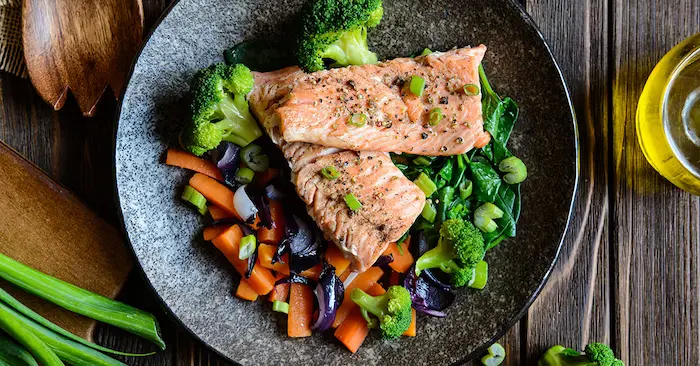
- Dinner: baked salmon with lemon and dill, quinoa pilaf with roasted vegetables, a side salad, and sparkling water with lime.
- Evening snack: an oatmeal energy ball with a glass of milk or fortified plant milk.
Special Considerations for Different Diets
You can absolutely have a healthy breastfeeding journey on a plant-based diet; it just takes some planning. The Academy of Nutrition and Dietetics notes that vegan mothers should be especially mindful of vitamin B12, iron, calcium, zinc, and DHA, which may mean fortified foods or supplements, so chatting with a registered dietitian who understands plant-based nutrition can help. And if your baby is diagnosed with a food allergy, your own diet may need adjusting; work closely with an allergist or pediatrician so you can avoid triggers while staying well nourished yourself.
Frequently Asked Questions
It is possible but less common than people think. When there is a sensitivity, it is usually cow’s milk protein. If your baby seems consistently uncomfortable, talk to your pediatrician before cutting foods, so you find the real cause without sacrificing your own nutrition.
Many doctors recommend continuing your prenatal vitamin while nursing, and vitamin D is typically recommended for the baby. Ask your doctor whether you might need extra DHA, B12 (if you are vegan), or iron based on your own health.
Slow and steady wins, around one to two pounds a week. The CDC warns that cutting calories too drastically can lower your supply, so focus on nutrient-dense foods, stay hydrated, and give your body time to find its new balance.
Infant reflux is usually caused by an immature digestive system rather than your diet. Some moms find limiting caffeine, spicy foods, or dairy helps, but work with your pediatrician to tell normal reflux from something that needs more attention.
Not at all; this is a myth. You can get all the calcium and nutrients you need from leafy greens, tofu, fortified plant milks, and other foods. Many mothers breastfeed successfully without any dairy.
Nourishment Over Perfection
If you take away one thing, let it be this: you do not have to eat perfectly to be a successful breastfeeding mom. Your body is incredibly resilient, and your baby still gets high-quality milk even on the days you survive on granola bars and coffee. The goal is not perfection; it is sustainability. Some days you will have a balanced plate of salmon and quinoa, and other days you will eat whatever you can manage one-handed while holding a crying baby. Both are okay. Both are enough. Listen to your body, drink when you are thirsty, choose foods that give you energy, and reach out to a healthcare professional whenever you want extra guidance. You are doing something amazing for your baby, so take care of yourself too.
References
- Centers for Disease Control and Prevention. (2024). Maternal diet while breastfeeding. cdc.gov/breastfeeding
- American College of Obstetricians and Gynecologists. (2023). Nutrition during pregnancy and breastfeeding. acog.org/womens-health
- American Academy of Pediatrics. (2023). Breastfeeding and nutrition. healthychildren.org
- Mayo Clinic Staff. (2024). Breastfeeding nutrition: Tips for moms. mayoclinic.org
- Academy of Nutrition and Dietetics. (2023). Vegetarian and vegan diets while breastfeeding. eatright.org