Open any browser, search “baby registry checklist,” and prepare to feel immediately overwhelmed. There are lists with 50 items. Lists with 100 items. Lists so long they could double as a department store inventory. Bassinets, bouncers, bottle sterilizers, bottle warmers, wipe warmers, diaper pails, diaper stackers, diaper cream spatulas, yes, that is a real thing, and the message underneath all of it is clear: you need to buy all of this, or you are failing your baby before they have even arrived.
You are not.
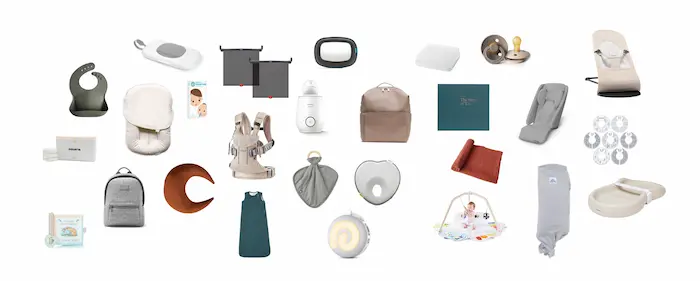
Babies have been arriving on this planet for hundreds of thousands of years. They have been born in every possible circumstance, without specialty gear, without curated nurseries, without any of it, and they survived and thrived, because babies need remarkably simple things: safety, nourishment, warmth, and the presence of someone who loves them. Everything else is optional. Some of it is genuinely helpful. A lot of it is marketing dressed up as necessity.
This guide is your permission slip to build a simple baby registry. We will go through every category, separate what you actually need from what someone wants you to think you need, and help you put together a list that respects your budget, your living space, and your future sanity. Because the best gift you can give your newborn is not a nursery full of stuff; it is parents who are not buried under it.
Before You Start: One Critical First Step
Here is something most registry checklists do not mention: hospitals vary widely in what they provide. Some supply virtually everything for your postpartum stay, including mesh underwear, maternity pads, perineal care items, diapers, wipes, and receiving blankets. Others provide the bare minimum and expect you to bring everything.
Call your hospital’s labor and delivery department before you finalize anything. Ask what they provide for postpartum recovery, what they provide for the baby during your stay, and what you should absolutely bring from home. This five-minute phone call prevents significant overpacking and helps you understand what you are actually starting with.
Why Minimalism Matters Here
The argument for a minimalist baby registry is not just about saving money, though it is about that too. It is about the full picture of what owning a lot of things costs you.
Space is the first cost. Most of us do not live in homes with sprawling dedicated nurseries. The “nursery” is a corner of the bedroom, or a room that is also the guest room, or a small apartment where every item has to earn its square footage. Things that do not earn it become clutter, and clutter has a real psychological cost in an already demanding season of life.
The second cost is mental load. Every item you own requires something from you: it needs to be cleaned, stored, organized, maintained, and eventually donated or sold. In the sleep-deprived fog of new parenthood, less stuff means less management, and less management means more capacity for what actually matters. ACOG emphasizes that parental mental health is critical for infant wellbeing, and a simpler environment supports that in ways a cluttered one does not.
The third is financial. USDA estimates have long put the cost of raising a child to age 17 well into the hundreds of thousands of dollars, and every dollar spent on an unnecessary gadget is a dollar not available for childcare, diapers, or the thousand unexpected expenses that come with actually parenting a human. A minimalist registry is a financial decision, not just an aesthetic one.
Sleep Zone: Where Safety Matters Most
Newborns sleep 16 to 17 hours a day. The sleep zone is where safety regulations are strictest and where the minimalist approach is most important, because the extra items sold for this category are often not just unnecessary but actively dangerous.
What You Actually Need
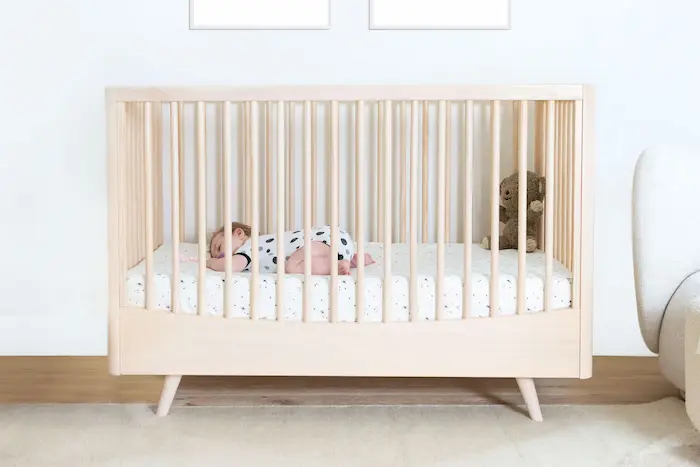
A safe sleep surface, meaning either a bassinet for the first few months, which is portable, fits next to your bed, and is ideal for the AAP-recommended room-sharing, or a crib that will see your baby through to toddlerhood. The AAP is unambiguous: infants should sleep on a firm, flat surface in their own space, with no soft bedding, pillows, or bumper pads. This is not a preference; it is a SIDS prevention guideline with strong evidence behind it, and our guide to SIDS prevention and safe sleep covers why each element matters.
Register for one bassinet or crib, one firm tight-fitting mattress in the matching size, and two to three fitted cotton sheets with snug elastic edges. That is the entire sleep zone, and the only thing on that mattress should be a fitted sheet.
Sleep sacks, sometimes called wearable blankets, replace loose blankets entirely, keeping the baby warm without suffocation risk. Register for one or two in newborn size and a couple in a larger size for when the baby grows. A simple room thermometer rounds it out, since babies sleep best in a cool room around 68 to 72°F and overheating is a documented SIDS risk factor.
What to Skip
Crib bumpers, which are banned in several states and recommended against by the AAP because they pose suffocation and entrapment risks. Positioners or wedges, also associated with suffocation risk. And crib canopies, specialty sleeper pods, and elaborate bedding sets, meaning the quilt, the decorative pillow, and the coordinating valance, none of which goes in the crib. You are paying for something that sits in a closet.
Feeding: What You Need Depends on How You Feed
How you feed your baby is deeply personal, and the registry items that make sense depend on your approach. But there is a common theme across all methods: you need less than the industry suggests.
For Breastfeeding
A breast pump if you are returning to work or want the flexibility to pump. In the US, the Affordable Care Act requires most insurance plans to cover breast pumps, so check with your insurer before registering for an expensive one, and our guide to the best breast pumps covers what actually differentiates them. Beyond that: nipple cream for the first weeks, which can genuinely be rough; two or three comfortable, stretchy nursing bras or tanks, since you will wear these constantly; and milk storage bags, but just one box to start until you know your output.
A nursing pillow is helpful but not strictly necessary, since regular pillows work. A nursing cover is optional; many parents prefer the two-shirt method or finding a quiet spot.
For Formula Feeding
Start with four to six small bottles with slow-flow nipples, since babies are picky about bottle brands and there is no point registering for twelve of one kind until you know your baby accepts them. Add a bottle brush with a built-in nipple cleaner. For sterilizing, you can boil bottles or use microwave steam bags; a dedicated electric sterilizer is convenient but not essential. Our formula feeding guide covers safe preparation, which matters more than any piece of equipment.
For Everyone
Ten to twelve burp cloths at minimum, since you go through these constantly. Prefold cloth diapers make excellent, inexpensive burp cloths if you want to skip the printed sets. Four to six bibs for the spit-up phase, which lasts months. These are genuinely functional items that earn their place.
What to skip: bottle warmers, since a bowl of warm water does exactly the same thing and takes up zero counter space; formula dispensers, since any small container works; and sterilizer-dryer combo units, which are expensive and bulky when air drying is fine. And the diaper cream spatula, a tiny spatula so you do not get cream on your fingers. You have hands. Wash them.
Diapering: Functional, Not Fancy
You will change roughly 2,500 diapers in the first year alone. The diapering setup needs to work, not impress anyone.
What You Need
Diapers: one to two packs of newborn size, since many babies never fit newborn because they grow fast, and two to three packs of size one to start. Do not stockpile any size, because babies grow out of them before you use them up and you may need to switch brands for fit or sensitivity reasons.
Fragrance-free, hypoallergenic wipes, four to six packs to start. One tube of zinc oxide barrier cream for diaper rash prevention and treatment. A changing surface, where a changing pad on top of a dresser is the minimalist gold standard, since it is one piece of furniture serving two functions, or a portable waterproof pad that can be used anywhere. The CPSC is clear that babies can roll off elevated surfaces in seconds, so never leave them unattended on any surface regardless of straps. A portable diaper caddy for moving supplies around the house is also genuinely useful, especially in the first weeks when you are camped on the couch.
What to Skip
Diaper pail systems, since a lidded trash can with a foot pedal contains odor just as effectively and uses standard bags. Wipe warmers, which dry out wipes, can breed bacteria if not meticulously cleaned, and address a problem your baby does not have. Diaper stackers, which look organized but make it hard to see how many you have left, where a basket is better. And dedicated changing tables, a large piece of furniture that serves one purpose when a pad on a dresser serves two.
Bathing and Grooming: Keep It Simple
Newborns get sponge baths until the umbilical cord falls off, usually two to three weeks, and occasional tub baths after that. You need surprisingly little for this category.
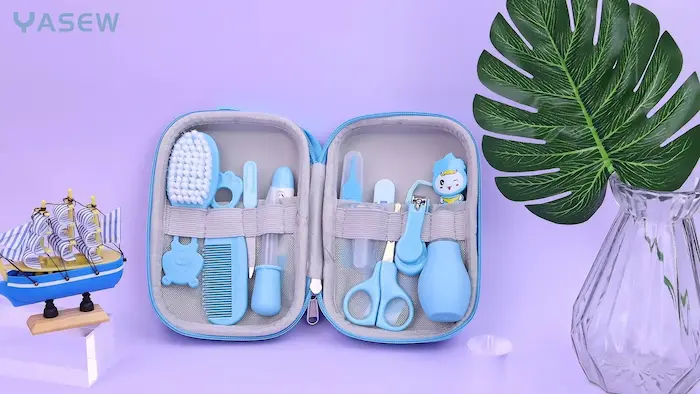
An infant tub that fits in your sink or bathtub, where a simple sling or basic plastic tub works fine. One bottle of fragrance-free, tear-free baby wash, and that is it, not separate shampoo, body wash, lotion, and oil, since the Mayo Clinic recommends minimal products on newborn skin to avoid irritation. Two soft hooded towels. A soft brush or comb for that first hair. Baby nail clippers with a safety guard or an electric nail file, since newborn nails are sharp and grow fast. And a reliable digital rectal thermometer, the most accurate type for infants and genuinely essential, since the AAP recommends immediate medical attention for any fever in a newborn under two months.
Skip the elaborate bath gift sets, since you will use one product; baby cologne, since fragrances can irritate newborn skin and airways; and any grooming kit with fifteen items when you need three.
Clothing: Where Most Parents Overbuy
The urge to dress a tiny human in adorable outfits is real and completely understandable. But babies grow so fast that many clothes are worn once, if at all. WHO growth charts show just how dramatically infants gain weight and length in the first year, and buying ahead is risky because you do not know what season your baby will be in at each size.
What to Register For
Five to seven onesies, short or long sleeve depending on season, and look for envelope necks and lap shoulders, which make both dressing and blowout cleanup dramatically easier. Four to five sleepers in footed or gown styles, where gowns are especially practical for middle-of-the-night diaper changes since there are no snaps or zippers to fumble with in the dark. Two to three soft pants or leggings. Three to four pairs of socks. One to two hats if your climate requires them. Two to three swaddle blankets if you plan to swaddle. And one to two nicer outfits for photos or visits.
Register for mostly 0-3 month sizes with a few newborn items, since many babies arrive too large for newborn and skip that size entirely. Do not remove tags until each item is used, and keep receipts.
What to Skip
Newborn shoes, since they do not walk, shoes are purely decorative, and they fall off immediately. Stiff jeans or structured pants, which are uncomfortable for babies who want to curl and move. Formal wear unless you have a specific event scheduled. Matching sets of everything. Any clothing item that is complicated to put on a wriggly newborn in the middle of the night is the wrong clothing item.
Gear: The Big-Ticket Decisions
Infant Car Seat
Non-negotiable. You cannot leave the hospital without one, and the AAP recommends keeping children rear-facing as long as possible. You have two options: an infant bucket seat that clips into a base, making it easy to move a sleeping baby without disturbing them but outgrown relatively quickly, or a convertible seat that stays in the car and transitions from rear-facing to forward-facing for years, which is more economical long-term but less convenient for newborns. Either works; choose based on your priorities. Ensure it is not expired, not recalled, and has never been in a crash.
Stroller
You need a way to move the baby outside. Consider your life: city living calls for something lightweight and maneuverable, suburban life might benefit from more storage, and runners need specific features. Consider compatibility with your car seat, since many strollers accept infant bucket seats as a travel system, and consider longevity, since strollers that adapt from infant to toddler are better value than buying two. Do not overbuy features you will not use.
Baby Carrier or Wrap
For hands-free parenting, a carrier is genuinely invaluable. Options include stretchy wraps, which are excellent for newborns and offer lots of adjustment; structured carriers, which are more supportive for older babies and often work from newborn with inserts; and ring slings, a middle ground. Register for one to start and see if you and your baby like it before acquiring more, since the best carrier is the one you will actually use.
Nice But Not Essential
A bouncer or swing is genuinely helpful for some babies and completely unused by others, so if you have budget and space it may be worth registering for one, and if not, a blanket on the floor is a perfectly safe supervised awake surface. A baby monitor is unnecessary if you are room-sharing in the early months; later, a simple audio monitor often suffices, and video monitors with every feature are a preference rather than a necessity.
The Postpartum Essentials Most Registries Forget
Most baby registries focus entirely on the baby. But the person who grew and birthed that baby also has significant physical needs in the weeks immediately following delivery, and registering for those items is not selfish; it is practical and important.
ACOG emphasizes that postpartum recovery is a critical period requiring support and proper care. Include a perineal irrigation bottle (peri bottle) for gentle cleansing after vaginal delivery, witch hazel pads for soothing, disposable mesh underwear, which is genuinely more comfortable than managing pads in your own underwear in those first days, nipple cream if breastfeeding, and breast pads for leakage. Add a large water bottle with a straw, since hydration is critical for both recovery and milk production and you will drink significantly more if it is right next to you, plus comfortable high-waisted underwear and soft loose pants for the weeks when nothing else fits comfortably yet.
Understanding what is actually happening to your body during this period, what is normal, what to watch for, and what helps, is worth knowing before it happens rather than working it out in the moment. Our guide to postpartum body changes in the first six weeks covers it in detail.
The Complete Minimalist List
Here is the summary of what actually belongs on a minimalist baby registry: everything you need, nothing you do not.
- Sleep: bassinet or crib, firm mattress, 2-3 fitted sheets, 2-4 sleep sacks, room thermometer
- Feeding (breastfeeding): breast pump (via insurance), nipple cream, 2-3 nursing bras, milk storage bags, nursing pillow (optional), 10-12 burp cloths, 4-6 bibs
- Feeding (formula): 4-6 small bottles with slow-flow nipples, bottle brush, a sterilizing method, 10-12 burp cloths, 4-6 bibs
- Diapering: small quantities of newborn and size 1 diapers, fragrance-free wipes, zinc oxide cream, changing pad, portable diaper caddy
- Bathing: simple infant tub, one fragrance-free baby wash, 2 hooded towels, soft brush, nail clippers or electric file, digital rectal thermometer
- Clothing: 5-7 onesies, 4-5 sleepers, 2-3 soft pants, 3-4 pairs of socks, 1-2 hats, 2-3 swaddle blankets, 1-2 special outfits
- Gear: infant car seat, stroller, baby carrier or wrap
- For the birthing parent: peri bottle, witch hazel pads, mesh underwear, nipple cream, breast pads, large water bottle, comfortable recovery clothing
How to Build the Registry
Use two or three different stores to take advantage of completion discounts and give guests options at different price points. Include a range of prices: big-ticket items like the car seat and stroller for group gifts or generous family members, mid-range items like the carrier and breast pump, and small items like burp cloths, onesies, and the thermometer for guests who want something concrete at a lower price point.
Do not buy everything before your shower. Wait and see what you receive, then use the completion discount, typically 10 to 20% off, to purchase what you still need, which is the most financially efficient approach. Consider adding a cash fund option for diapers, childcare, or savings, since some guests genuinely prefer this and it is worth including alongside physical items.
Frequently Asked Questions
No, and most experienced parents will tell you a significant portion of what they registered for went unused. The items on most standard checklists are a mix of genuine essentials, things that help some families but not others, and products the baby industry has normalized through decades of marketing. Starting minimal and adding items as you identify actual needs is the most practical approach: you can always buy something if you discover you need it, but you cannot un-clutter your home from things you bought and did not.
An infant car seat, since it is legally required and non-negotiable. Beyond that: a safe sleep surface, a feeding setup appropriate for your approach, and diapers and wipes. Those are the actual non-negotiables, and everything else is support structure around them.
Not necessarily. If you have space for a crib you can use it from birth, and many parents place it beside their bed for room-sharing. A bassinet is convenient because it is smaller and more portable, but it is a shorter-term purchase, since most babies outgrow them around 3 to 4 months. If space or budget is limited, a crib alone is sufficient. Whichever you choose, follow the manufacturer’s setup instructions rather than improvising with anything that changes the sleep surface angle.
The second trimester is ideal, since you have time to research, nothing is urgent, and you are not yet in the third-trimester fog. Have it finalized by around 36 weeks, which is also the general recommendation for having your hospital bag packed. Baby showers typically happen in the third trimester, so having the registry ready at least a month before gives guests time to shop.
Most items are perfectly fine second-hand, including clothing, burp cloths, carriers, and strollers. Car seats are the primary exception: you should not use a second-hand car seat unless you can personally verify its history, since a seat that has been in a crash may have compromised structural integrity that is not visible. Check expiration dates on any seat you are considering, as they typically expire 6 to 10 years from the manufacture date.
Your going-home needs are relatively minimal. For the baby: one going-home outfit in both newborn and 0-3 month sizes, since you will not know which fits until the baby arrives, plus the car seat. For you: loose, comfortable clothing, since you will still look several months pregnant when you leave, so pack a size up from pre-pregnancy, stretchy leggings or loose pants, and slip-on shoes because your feet may be swollen. More detail on what those first days look like physically is in our guide to postpartum recovery in the first six weeks.
One Last Word
Your baby does not need most of what standard registry checklists include. Your baby needs to be fed, kept warm and dry, given a safe place to sleep, and held by someone who loves them. That is the actual list. Everything else is support for that list, and most of that support does not require nearly as much stuff as the industry suggests.
Register for what you need. Skip what you do not. Save your money, your space, and your mental energy for the actual work of new parenthood, which will demand all three in ways no gadget can help with. The best equipped parents are not the ones with the most stuff; they are the ones who created the simplest, most sustainable environment for doing a very hard thing well.
References
- American Academy of Pediatrics. (2022). Safe sleep recommendations. aap.org/en/patient-care/safe-sleep
- American College of Obstetricians and Gynecologists. (2018). Optimizing postpartum care. acog.org/clinical
- Centers for Disease Control and Prevention. (2024). Infant formula preparation and storage. cdc.gov/infant-toddler-nutrition
- Eunice Kennedy Shriver National Institute of Child Health and Human Development. (2023). Safe to Sleep campaign. safetosleep.nichd.nih.gov
- Mayo Clinic Staff. (2024). Healthy baby: Skin and bath care. mayoclinic.org
- U.S. Consumer Product Safety Commission. (2023). Crib and nursery product safety. cpsc.gov